Presidency Briefing #3 — Livestock and protein take centre stage
WEEKLY BRIEFING
7/27/20263 min read
1. Executive summary
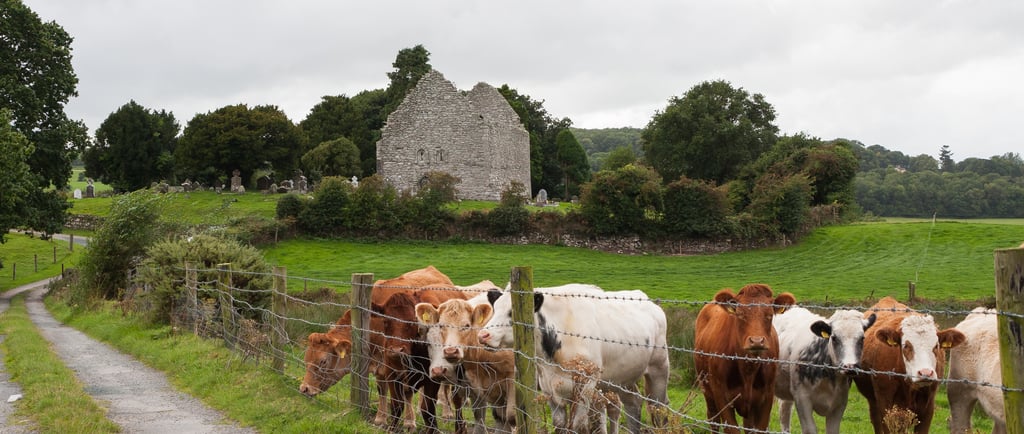
The first AGRIFISH Council under the Irish chair, on 13 July, gave ministers their first formal discussion of two significant new files: the EU's first-ever Livestock Strategy and an accompanying Protein Action Plan, both published by the Commission on 7 July.
2. This week's key developments
- The EU Livestock Strategy reached Council. The Commission's first dedicated strategy for a sector that employs around 7 million people and generates €400 billion in annual turnover across the EU. Why it matters: it sets the ten-year direction for beef, dairy, pig and poultry farming — the core of Irish agriculture.
- The Protein Action Plan was tabled alongside it. A plan to lift the EU-grown share of animal-feed protein from 25% today to 35% by 2035, with a proposed distinct protein-crop sector under the post-2027 CAP. Why it matters: it opens a genuine opportunity for Irish tillage.
- Ministers held an exchange of views on the post-2027 CAP. No conclusions — this was a debate, not a decision — but it is the first read on how the budget and single-fund arguments play out under the Irish chair. This will likely be drawn out over the coming weeks and months.
3. Agriculture & food
The Livestock Strategy is built around five priorities: crisis preparedness (new risk-management tools and stronger animal-disease prevention); competitiveness (profitability, innovation, access to finance, fair farm incomes); sustainability (animal-welfare revisions for laying hens, young chickens and pigs — with transition periods and financial support — plus harmonised farm-level emissions methods and nutrient management); being fit for all farms and regions (a plan to sustain livestock in vulnerable areas and a roadmap for low-capacity and mobile slaughterhouses to cut animal transport); and excellence (stronger EU origin labelling and quality recognition). Reported detail also points to welfare proposals for hens and broilers by end-2026 and pigs in 2027, with equivalent welfare requirements for imports — the level-playing-field point Irish producers press hard on. Reaction has been mixed: farm and feed-industry bodies broadly welcomed the direction, while environmental groups argued it diagnoses the problems well but lacks binding measures.
The Protein Action Plan responds to a stark dependency: the EU imports around a quarter of the protein used to feed its livestock — soya-dominated, at roughly 13.4 million tonnes of crude protein, mainly from Brazil, the United States and Argentina. The plan would incentivise protein crops through the CAP, back investment in processing and storage, and take a bioeconomy approach. The Irish Grain Growers' Group has long argued there is "tremendous scope" to substitute imported soya with native oilseed rape, peas and beans — supporting the tillage sector and lowering the livestock carbon footprint.
4. Climate & environment
Both strategies carry environmental weight. The Livestock Strategy commits to harmonised methods for calculating farm-level emissions and to better nutrient management — the latter directly relevant to Ireland, where the nitrates derogation hinges on water-quality performance under the Sixth Nitrates Action Programme (2026–2028). Reported plans to simplify the Nitrates Directive will be watched closely here. Separately, the draft National Nature Restoration Plan remains due to the Commission by 1 September — the hard environmental deadline of the term.
5. Research & innovation
Both files lean on innovation and the bioeconomy: precision livestock techniques, breeding, feed efficiency and biomass valorisation in the Livestock Strategy; plant-protein value chains and processing in the Protein Plan. Delivery runs largely through CAP instruments and the next MFF, tying these ambitions back to the budget question. Horizon Europe remains the main research channel; relevant calls will be flagged as they open.
6. Opportunities & upcoming events
- Fertiliser-cost relief nearing adoption. As context to the competitiveness debate, the Commission's proposed €540 million fertiliser-relief package (up to €1.5 billion with national top-ups) — plus CAP flexibilities like a rural-development liquidity scheme and earlier direct payments — is targeted for final adoption by end July 2026. Irish tillage and livestock farmers facing high input costs should track how Ireland applies these opportunities.
- National Nature Restoration Plan — draft due 1 September.
7. What this means for Ireland
For Irish agriculture, this week's files land closer to home than the budget headlines. The Livestock Strategy will shape the operating environment for beef and dairy in particular: the animal-welfare revisions and the insistence on import equivalence matter for both cost and competitiveness; the nutrient-management and emissions-accounting workstreams intersect directly with the nitrates derogation; and the mobile-slaughterhouse and origin-labelling measures could support smaller and regional producers. The Protein Plan is a rare unambiguous opportunity: a policy tailwind for Irish tillage to grow native protein crops and displace imported soya, with a supply-chain and carbon rationale attached. The practical step for agri-food businesses is to read both strategies against your own enterprise now — welfare timelines, feed sourcing, emissions reporting — rather than waiting for the CAP budget to settle, because much of this proceeds on its own track.
8. Looking ahead
The immediate watch is the detailed readout of Monday's CAP exchange of views — the tone Ireland set and where the net-contributor and recipient camps diverged. Beyond that, the fertiliser-relief adoption at end-July, the 1 September nature-restoration deadline, and the October European Council as the budget waypoint. We will update positions in Briefing #4.
Consultancy
Expert guidance for agri-food sector challenges.
Services
Contact
ronan@freshconcept.ie
© 2026. All rights reserved.