Week 2 of Ireland's EU Presidency: the €1.73 trillion budget, the ring-fence question, and what to watch out for at the 13 July AGRIFISH Council.
7/6/20263 min read
1. Executive summary
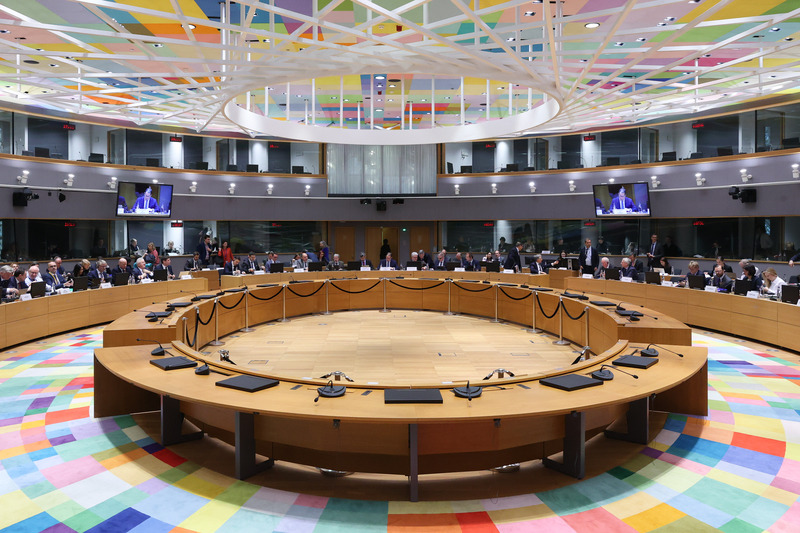
Ireland's first full working week in the chair sharpened the central question of the term: not whether the Common Agricultural Policy survives the next budget, but in what form and with how much certainty. Ireland inherited a draft budget — a "negotiating box" of roughly €1.73 trillion — from the outgoing Cyprus Presidency, and has been tasked with moving it toward a political agreement by the October European Council. For agriculture, details for the post-2027 CAP, comes to ministers' table for the first time under Irish chairmanship at the AGRIFISH Council on 13 July. This briefing sets out what to watch out for.
- The scale of the budget task becomes clearer: Ireland is working from an inherited negotiating box of about €1.73 trillion — roughly 2% below the Commission's original proposal which is still far from agreed. This sets out the ceiling within which the CAP allocation is fought over.
- Familiar divided opinions are reopened. Net-contributor member states are questioning the budget's overall size, while major recipients are warning against cuts to the CAP and cohesion funds. Ireland's job is to bridge these camps, and the agriculture fund sits down the middle between the camps.
- The Irish Presidency has committed to protect the CAP and Cohesion Policy and to facilitate a timely agreement, with the October European Council as the near-term milestone and a political deal targeted before year-end.
2. Agriculture & food
The post-2027 CAP is the defining agriculture file of the Presidency, and 13 July is its first outing at Council under the Irish chair. The structural question remains the single fund: the Commission proposes an €865 billion National and Regional Partnership Fund that merges the CAP in alongside other shared-management money, with a ring-fenced minimum — of the order of €300 billion — reserved for farm income and crisis support. As the independent economist Alan Matthews has set out in detail, that ring-fence is best read as a floor, not a guarantee: how much actually reaches farming depends on how each member state allocates its share, and wealthier states are better placed to top it up than poorer ones. Ireland has framed the reform around predictability and fairness for farmers: certainty, accessible schemes, proportionate rules, and flexibility for regional and sectoral differences. Watch whether the 13 July discussion moves beyond restating positions toward the first hard negotiations.
3. Climate & environment
The environmental calendar is dominated by a hard national deadline: Ireland's draft National Nature Restoration Plan is due to the European Commission by 1 September. With the public consultation closed, the drafting and costing are now the live questions — earlier estimates have put the annual cost of restoring nature in Ireland at several hundred million euro. In parallel, the nitrates derogation remains conditional on demonstrable water-quality improvement under the Sixth Nitrates Action Programme (2026–2028). Both will increasingly shape what is permissible at farm level, regardless of how the CAP negotiations progress.
4. Research & innovation
Horizon Europe and the bioeconomy remain the main funding channels for agri-food research, and the competitiveness theme running through the MFF debate keeps agricultural innovation and skills on the agenda. We will flag relevant open calls as they appear.
5. Opportunities & upcoming events
- AGRIFISH Council under the Irish chair — Monday 13 July 2026. The first Council-level discussion of the post-2027 CAP under the Presidency; readout in next week's briefing.
- National Nature Restoration Plan — draft due to the Commission by 1 September; submissions and stakeholder engagement worth finalising now.
6. What this means for Ireland
For Irish farmers and agri-food businesses, this week reinforces that the negotiation is now about structure and certainty, not just numbers. A €300 billion ring-fence sounds substantial, but the practical question is how much of the €865 billion fund each member state chooses to direct to farming — and whether Ireland, as a relatively well-resourced state, tops up its allocation or not. In terms of planning for your business the implication is to model your business against a scenario where post-2027 support is less automatically ring-fenced, and more dependent on national allocation decisions. On the environmental side, the 1 September nature-restoration deadline and the water-quality conditions attached to the nitrates derogation are firm, near-term, and independent of the budget outcome, they warrant attention now.
7. Looking ahead
The week ahead centres on Monday's AGRIFISH Council — the first read on how quickly the CAP file advances under Irish chairmanship, and on the tone Ireland sets between net contributors and recipients. Beyond that, the October European Council is the waypoint the whole budget timetable is now organised around, and the 1 September nature-restoration deadline is close. We will report the Council outcome in Briefing #3.
Consultancy
Expert guidance for agri-food sector challenges.
Services
Contact
ronan@freshconcept.ie
© 2026. All rights reserved.